Case Study 02
Bridging the digital & physical world.
Proptech scale-up · smart building · first in-house product designer · seven engineers
I joined as the company's first in-house product designer and left as the de facto design lead — facilitating product strategy sessions, building the design and research function, and hiring three designers (one full-time, two part-time fixed-term contractors) into it. Six months in, when the app's contract PM left, there was no PM for it, so I owned that too: its roadmap, priorities, and epics, and defined what we needed to track to prioritise well.
The products were a native app, a new web platform, hardware integration, and a company's front door. Four surfaces that had to read as one coherent thing, and holding that together was the job. The details below are what it looked like in practice.
- Company
- Orbit (Scale-up) · 2021 – 2023
- Role
- First in-house product designer (end-to-end), responsible for all products and surfaces
- Products
- native apps on iOS and Android, a new B2B web platform, physical access hardware, third-party integrations
- Impact
- 0 → 1 B2B platform · reduced 70% support tickets and reduced 50% no-shows · built design and research systems
- Core squad
- CPO · CTO · PM · Engineering (7) · Customer Success · CMO · 3 designers hired (1 full-time, 2 part-time temporary consultants)
- Research
- Field studies · Usability testing · Product analytics · Interviews · Surveys
Team voices
“I had a lot of fun working with her in meetings discussing new screens and components, especially our favorite, the <TimeSelector /> component.”“She effortlessly bridges the gap between design and development.”
“She actively seeks feedback and values different perspectives, always striving to incorporate the best ideas into the final product.”
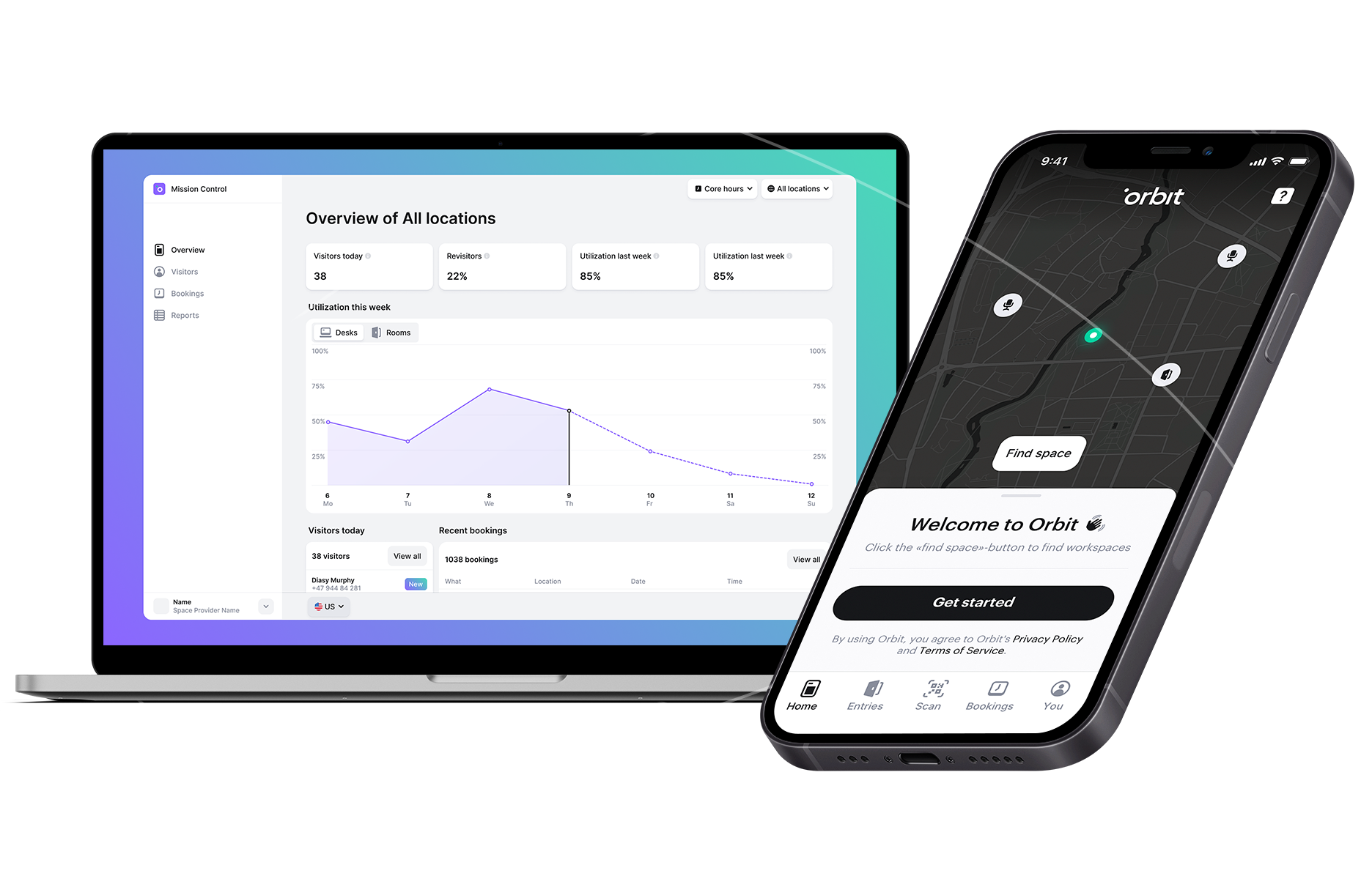
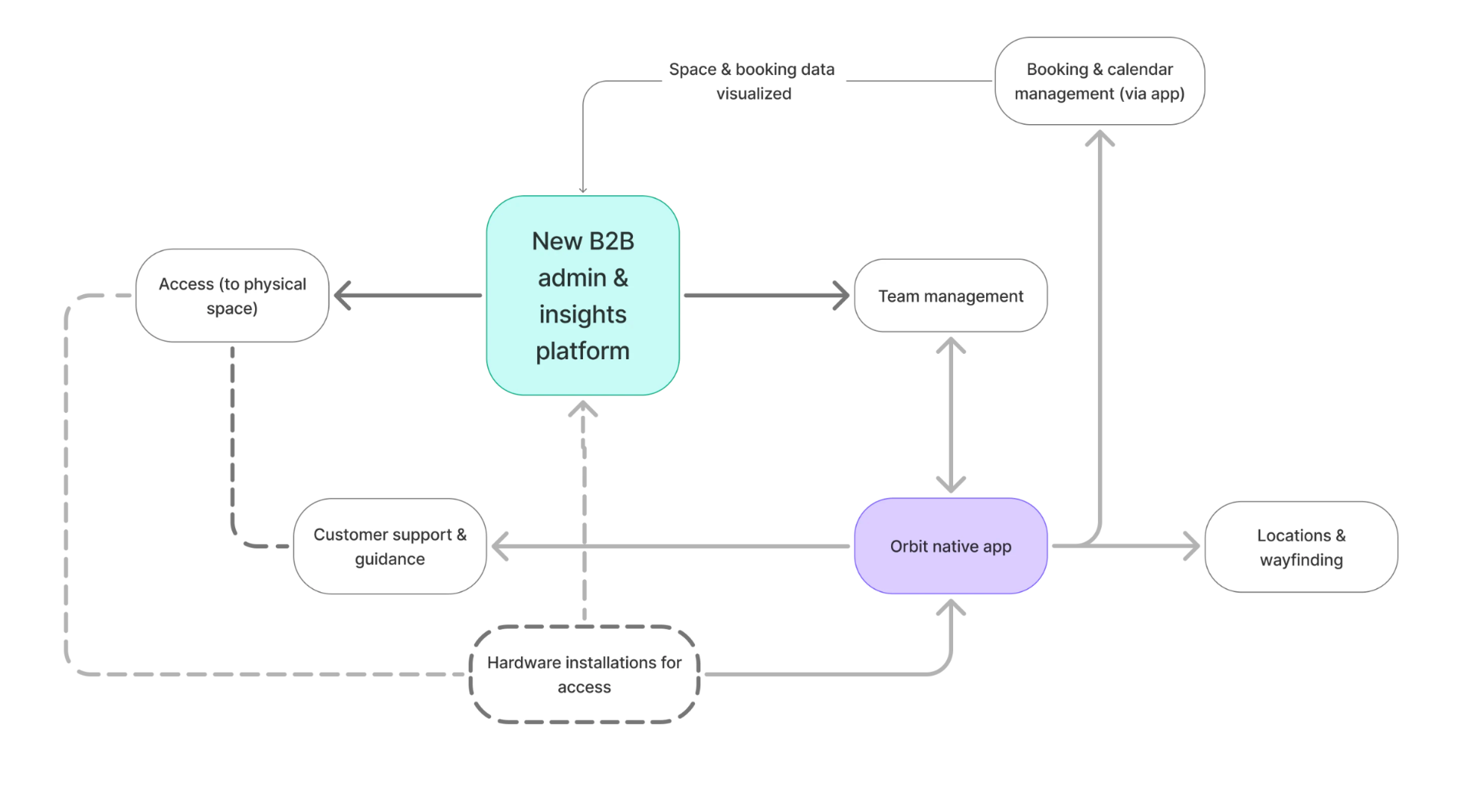
Synchronizing hardware access with enterprise insights.
The Challenge
The product served two audiences with two different problems.
- The admin & host (web): Could not manage their tenants themselves. Could not see bookings, real-time usage or room capacity utilization.
- The tenant (mobile): Didn't know why they couldn't open a door, were physically locked out with no simple mitigation option. Generic errors were confusing. Bookings could not be changed and led to regular ghost bookings and finding access / doors was frustrating.
Product 1: Native apps (iOS & Android, B2C & B2B)
One app for tenants getting into buildings and for admins running them.
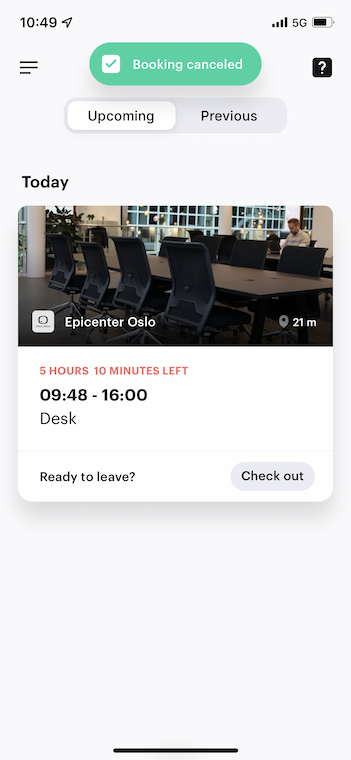
- Check-in & release: Shipped a check-in feature for bookings so unused rooms were made available again – connected this feature to the web platform so admins always saw the status of each booking in real-time.
- Preventing the error, not wording it better: Generic errors fired at the worst possible moment – while standing at a locked door, and told only error codes customers did not understand. Instead of just writing a kinder error messages, I surfaced each unlock method's status before the door: which will work, which won't, and why ("doesn't work while Bluetooth is off"), with a route to fix it while there's still time. When the system knew the specific cause, it said so; when it didn't, it didn't pretend. Support contacts dropped 70%.
- Two ways to the right space. Tenants often had access to twenty or forty buildings in one long scroll, so booking a space meant hunting for the location every time. The clean fix was proximity — surface the nearest first, automatically — but that only works if precise location permission is on, and for many users it wasn't. So I built two solutions: nearby sorting for users who'd granted location access, and favourites for everyone else, so no one was left scrolling. 80% of the user base set up a favourite in the first week.
- Mobile admin: Shipped search, filter, and team management on mobile so admins weren't blocked while the web platform was still being built.
Product 2: B2B platform (0 -> 1)
Unifying access control & real-time intelligence.
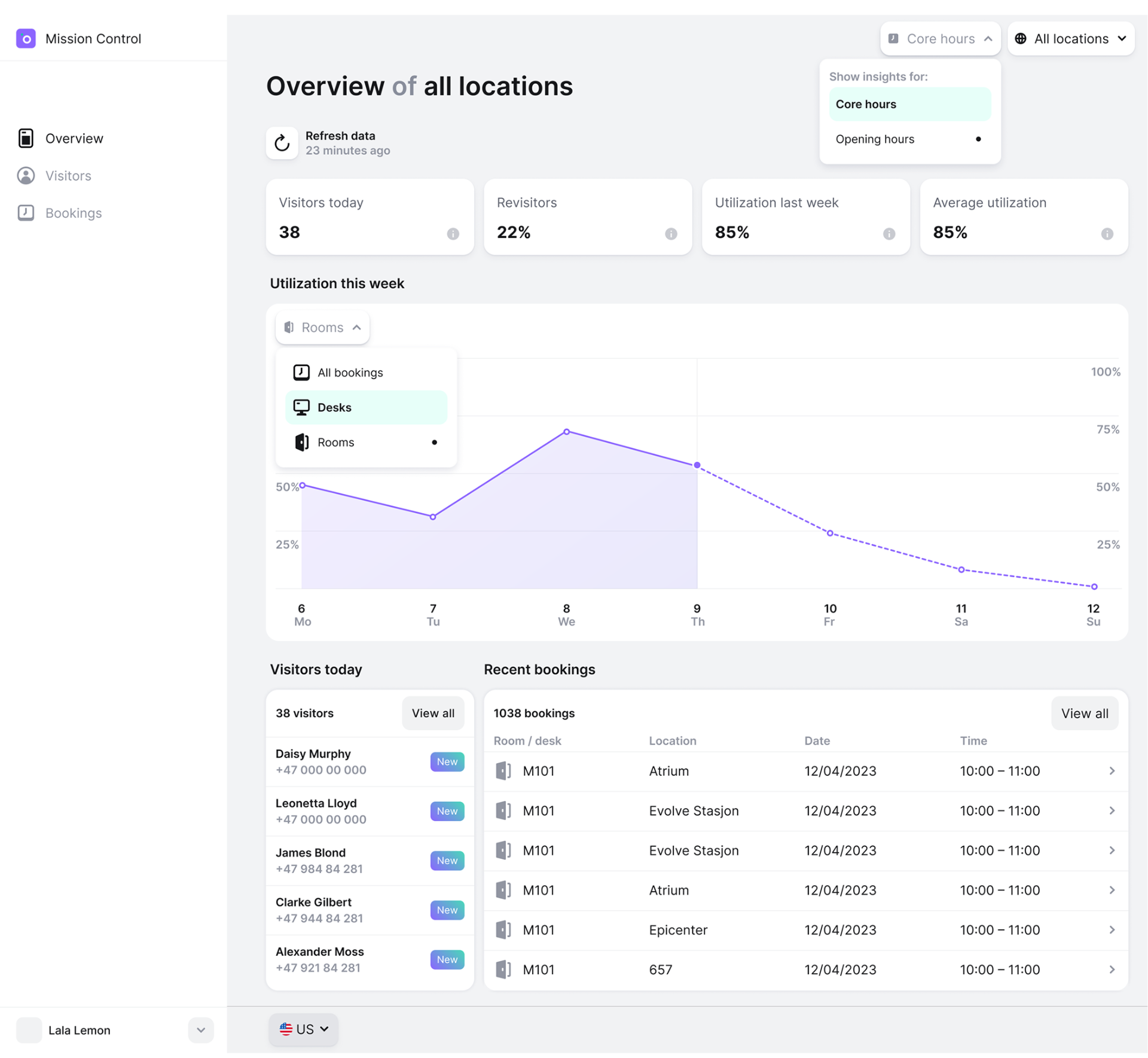
Building owners, facility managers, and team admins were running their spaces on spreadsheets and guesswork. I designed the web platform that replaced that: real-time usage, access management, and — the decision that made it click — an information architecture organised around location, the way a facilities manager actually thinks, not around teams, which was the way the database happened to be shaped.
Holding the permission model together.
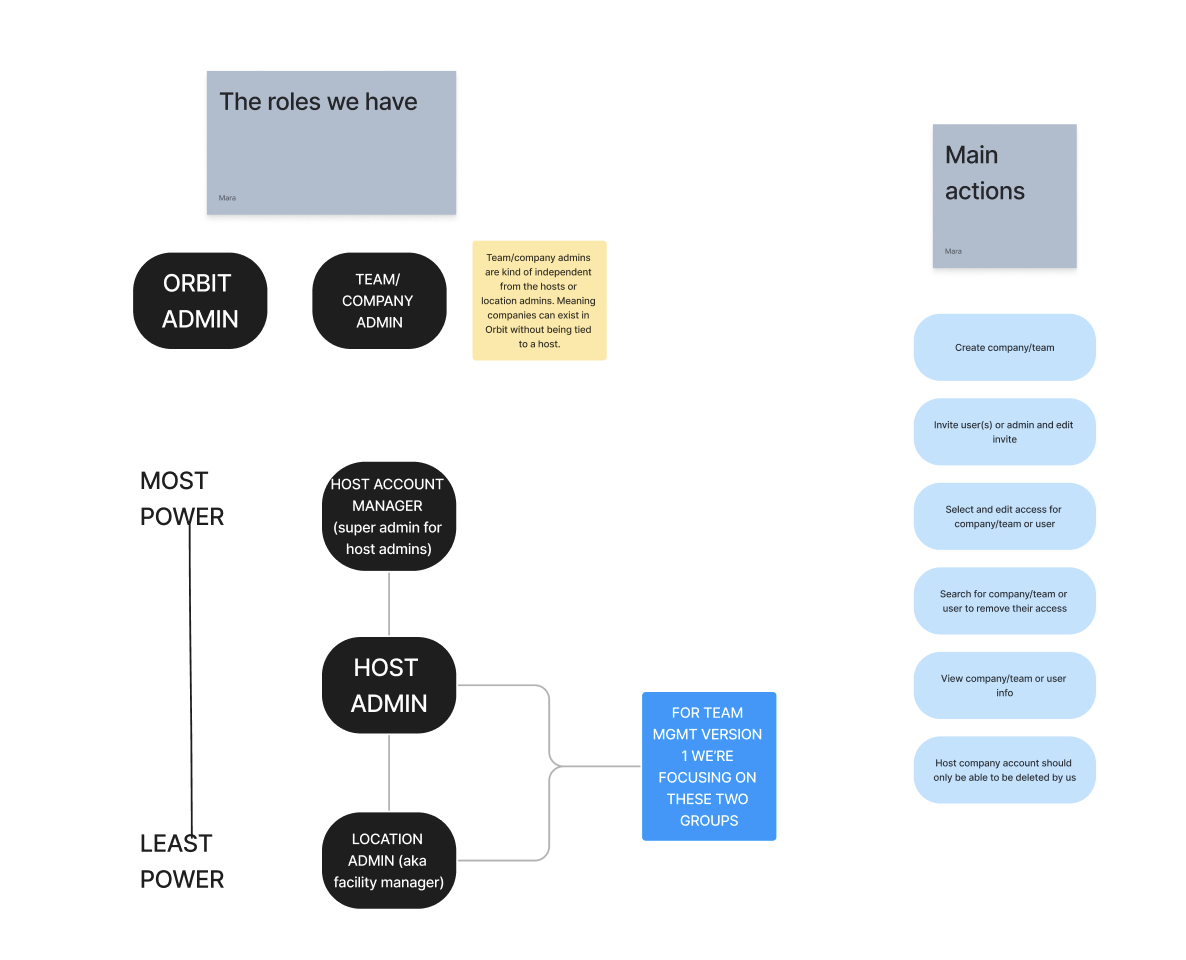
The access model was the most complex thing in the product: five roles — Orbit admin, Host account manager, Host admin, Location admin, and Team/company admin — each with different powers over companies, users, bookings, and physical access, and some able to exist independently of any host. Get it wrong and people either can't do their jobs or see what they shouldn't. No single screen was hard; holding the whole thing coherent was.
I mapped the roles first — who has power over what, and how it nests — before designing a single flow.
Then the full flow: every role's path through creating companies, inviting users individually or in bulk, assigning access groups, editing and removing access — and the edge cases underneath, from CSV imports to users who don't yet exist in the system to time-bound access. Where a decision wasn't made yet, I flagged it in place rather than designing past it.
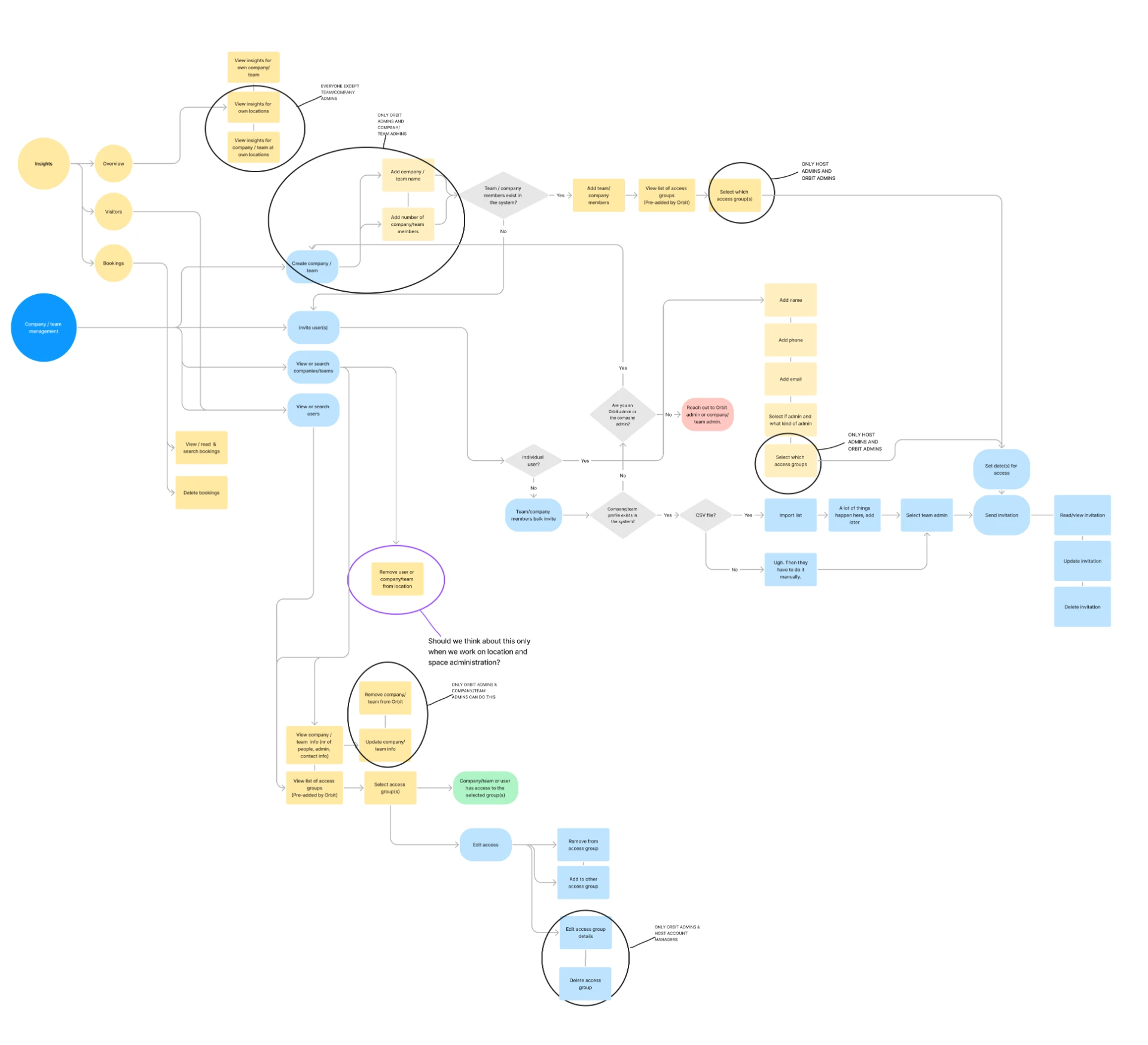
A permission model turns to spaghetti the moment it's designed screen by screen. It stays coherent only if someone holds the whole shape while building the parts — which, as the sole designer across four surfaces, was the job.
Examples
Native app
The door that wouldn't open.
People were standing outside meeting rooms they'd booked, holding a phone that was supposed to unlock the door, and it didn't. They couldn't fix it — what was wrong was buried in permissions, and nothing on screen told them that. So they called support, because from where they stood the product was broken. I redesigned the permission flow and the error states around it.
This feature reduced support contacts by 70%.
Native app
Booking people showed up for.
Rooms were being booked and abandoned. New booking features cut no-shows by 50% and measurably improved space utilisation.
No-shows reduced by 50%.
B2B web platform
Real-time utilization, team admin, bookings.
Building owners, facility managers, and team admins were running their spaces on spreadsheets and guesswork. I designed the web platform that replaced that: real-time usage, access management, and an information architecture organised around location, the way a facilities manager actually thinks.
Support operations
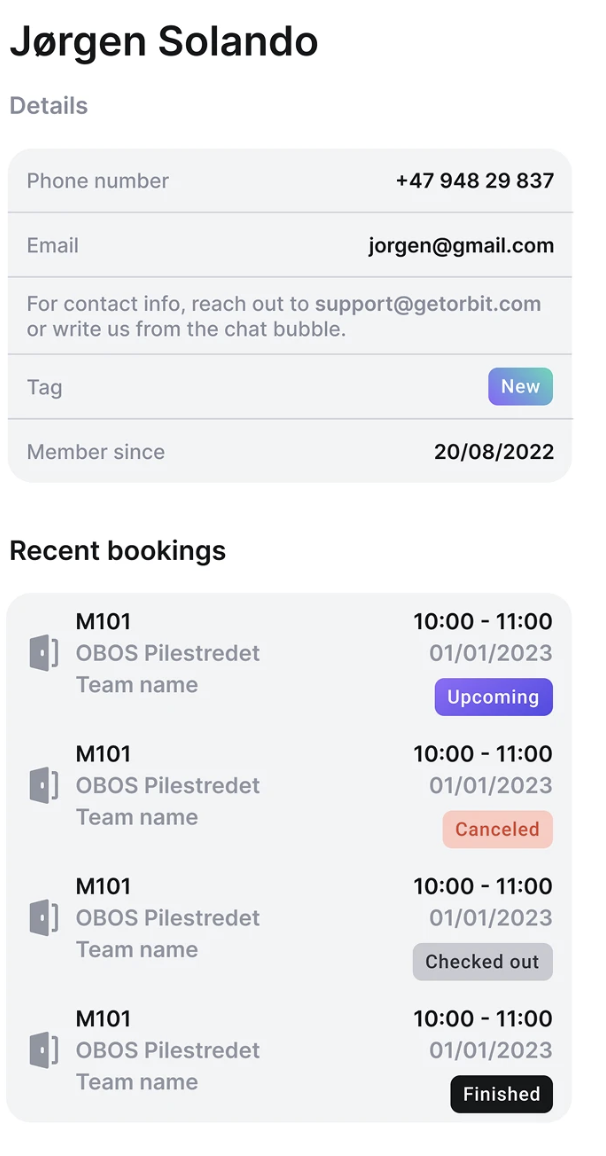
Faster resolve of booking issues.
By consolidating all booking and user information into one place, we created a single source of truth. This allowed support teams to resolve customer issues significantly faster.
Research library & principles
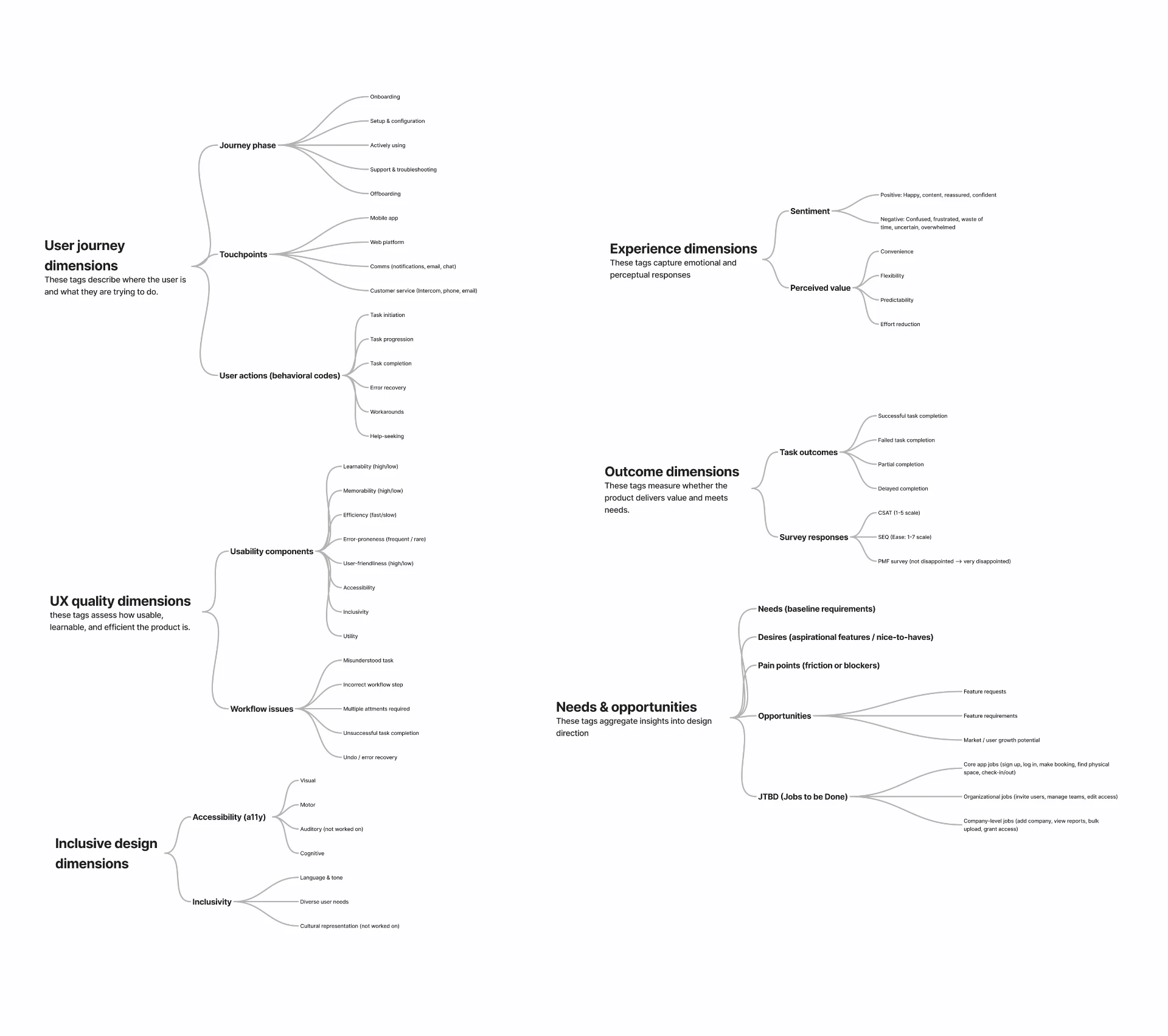
UX research & customer feedback systems.
I moved the company from Sketch to Figma; built the research pipeline in Dovetail so customer feedback actually reached prioritisation; wrote the research and design principles.
Impact (selection of examples)
-70%
Support Tickets — via Bluetooth access errors.
-50%
No-Show Rate — via Check-in Logic.
~15 hrs/mo
Engineering time reclaimed through the web platform's admin self-service.
Gallery
Explore the two products and process artifacts
Available for fractional and project work
Tell me what you're building, where it's stuck, and when you need someone. I'll tell you honestly whether I'm the right person.